


CoinPoker Account Access From Mobile, Desktop and Browser
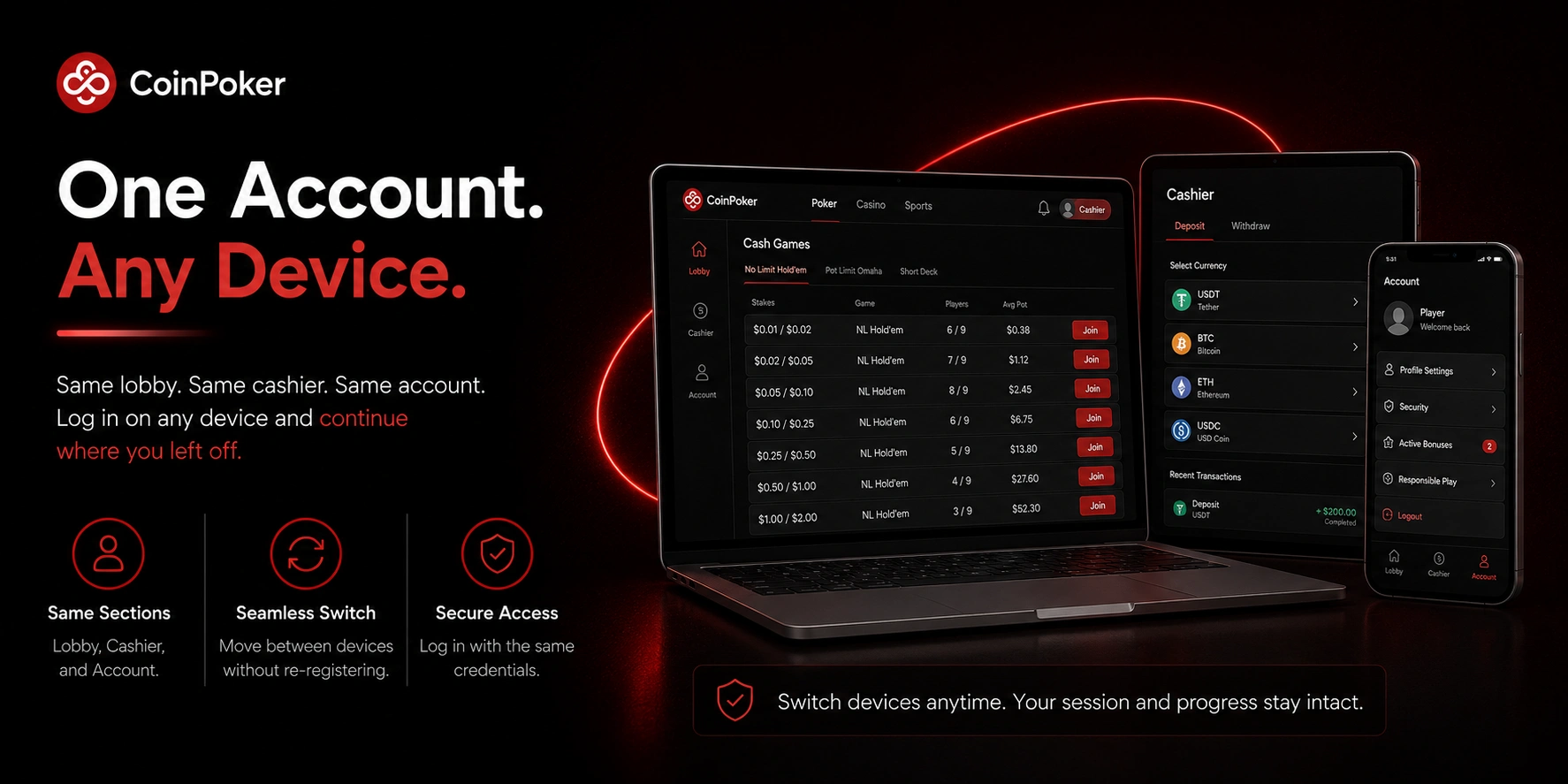
The same account works across every supported access method, so CoinPoker login is not tied to a single device or platform:
- Windows and macOS – desktop software clients with the full lobby, cashier, and account interface;
- Android and iOS – mobile apps installed through the official download page, mirroring the desktop layout for smaller screens;
- Mobile browser – instant access without installing anything, using Safari, Chrome, or another browser on a phone or tablet.
After signing in on any of these, the same set of sections opens: the poker lobby with cash tables and tournament listings, the cashier for deposits and withdrawals, and the account area covering profile settings and active bonuses. The current promotional structure is covered separately on the CoinPoker Welcome Bonus page.
CoinPoker Email and Password Entry for Returning Players
For a returning player, logging in uses a standard email and password form:
- Enter the email address used at registration into the login field;
- Enter the account password in the corresponding field;
- The platform checks the combination against the registered account details;
- If the account email hasn’t been confirmed since registration, a prompt to complete email verification may appear before full access is granted.
Verification checks are tied to the device rather than the network being used, so logging in from a new Wi-Fi network or a different city on a device that’s already been used doesn’t usually trigger extra steps. Switching to an unfamiliar device is what typically prompts additional verification, separate from the standard email and password check.
Once the email and password combination is accepted and any pending verification clears, the session opens directly into the account: the poker lobby, cashier, and account settings are all available from the main navigation without further steps.
CoinPoker Password Recovery and Login Troubleshooting
When login doesn’t work as expected, the cause is usually one of a small number of common issues, each with its own fix:
- Forgotten password: use the reset password option on the login screen, which sends a reset link to the registered email address;
- Incorrect email entry: double-check that the email address matches exactly what was used at registration, including any typos in the domain;
- Temporary technical issues: a brief delay or retry often resolves short-term server-side interruptions;
- Outdated app version: an older mobile or desktop client may need updating through the official download page before login succeeds;
- Browser-related issues: clearing cache or trying a different browser can resolve login problems specific to browser-based access.
If none of these resolve the issue, contacting support with details of the problem, including the device and access method used, is the next step toward restoring access.
CoinPoker Cashier and Poker Balance After Sign In
Once you’re signed in, the financial side of the account becomes accessible through the cashier:
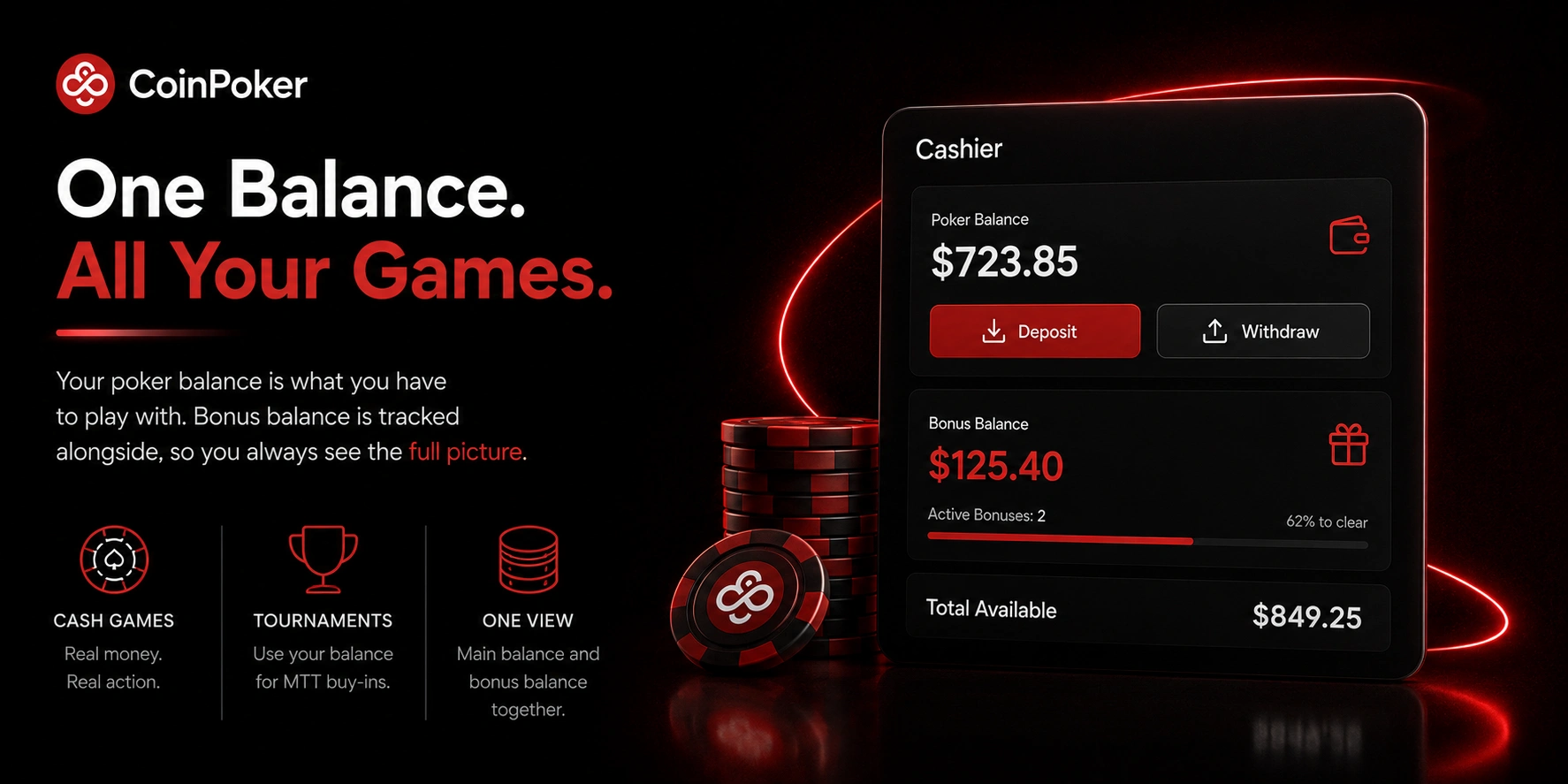
- Poker balance: the current available funds for cash games and tournament buy-ins;
- Deposit: adding funds to the account through any supported method listed in the cashier;
- Withdrawal: requesting funds out of the account back to a wallet or payment method;
- Currency selection: the display currency used for the poker balance and cashier amounts;
- Transaction history: a record of deposits, withdrawals, and balance changes tied to the account.
The poker balance shown in the cashier directly reflects what’s available for cash games and MTT buy-ins, and any active bonus balance is tracked alongside the main balance so both are visible in the same view after signing in.
CoinPoker Security Checks for Protected Account Use
Account protection starts at login and continues through ongoing use of the account:
- Email verification: confirms that the registered email address belongs to the account holder before full access is granted;
- Two-factor authentication: an optional extra layer on top of the password, worth enabling since it protects the account even if the password alone is compromised;
- Device-based verification: switching to a device that hasn’t been used on the account before can trigger an extra check, typically through SMS or a similar step, separate from routine password entry;
- Suspicious activity monitoring: unusual login patterns or account behaviour may trigger additional checks before certain actions are completed;
- Personal device use: logging in on a shared or public device increases the risk of unauthorised access to account details and balance.
This sits alongside CoinPoker’s broader approach to verification: standard cash game and tournament play doesn’t require document-based identity verification, but the platform can still request additional checks, for example on a first large withdrawal or unusual account activity. The two systems work independently, so not needing ID documents to play doesn’t mean the account itself is unprotected; the full requirements are set out in the AML & KYC Policy.
Account credentials, meaning the email and password combination, shouldn’t be shared with anyone else, including for tasks like depositing or claiming a bonus on someone’s behalf. If unauthorised access is suspected, contacting support directly is the appropriate next step, rather than attempting to resolve account-level security issues independently.